
The Core Definition
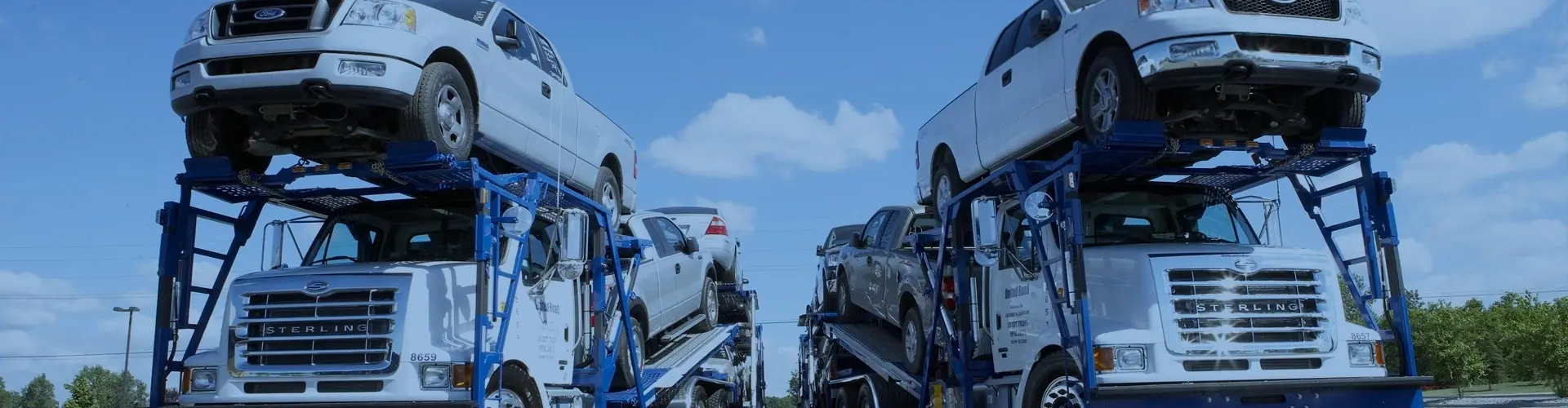
Strip away the marketing, and door-to-door means one specific thing: the carrier picks up and delivers as close to the addresses on the order as the truck can safely and legally get, without routing the vehicle through a separate storage terminal along the way. The driver comes to the customer instead of the customer driving out to a depot on either end. That's really the whole promise. Proximity and directness. Not a guarantee that a car hauler is squeezing between mailboxes on a residential cul-de-sac.
People sometimes assume "door-to-door" is a legal term with a fixed federal definition, the way "certified" or "licensed" might be. It isn't. It's an industry convention, and different companies apply it with slightly different levels of flexibility. That's exactly why it's worth spelling out rather than taking at face value.
Door-to-Door Versus Terminal-to-Terminal
Terminal-to-terminal service works differently. The vehicle gets dropped at a storage terminal, then waits there until a carrier with room on its trailer happens to pick it up on its own schedule. The same thing happens in reverse at the destination: the vehicle sits at a terminal near the drop-off point until someone comes to collect it. Two extra handoffs, two extra places where a vehicle sits idle, and two extra trips the customer has to make.
Door-to-door cuts both of those stops out entirely. For nearly everyone shipping a personal vehicle, that's the more convenient option, and it's why most brokers quote it first without even asking.
Where the Term Actually Comes From
Door-to-door language borrowed from freight and moving industries long before it became standard in auto transport. In general freight, it distinguished a direct shipment from one that passed through a distribution hub. Car shipping picked up the same phrase for the same reason: it's shorthand for "we come to you," and it stuck because it's an easier sell than explaining the full mechanics of how a load board and a dispatch network actually route a vehicle across the state or across the country.
Knowing the phrase has looser roots than a strict legal definition is useful context. It explains why one company's version of door-to-door might mean "we'll meet you at the end of your street" while another's means "we're backing straight into your driveway." Both are technically door-to-door. Only one of them is what most people picture when they hear it.
Why Door-to-Door Usually Costs More
Terminal-to-terminal can occasionally run a little cheaper, and the reason comes down to logistics rather than corner-cutting. A carrier consolidating stops around one fixed terminal location spends less time and fuel than one weaving through individual neighborhoods to reach ten different addresses. That efficiency sometimes gets passed along as savings.
Even so, the price gap has narrowed a lot as door-to-door has become the industry default rather than the upgrade. On most Texas routes today, the difference is small enough that the extra convenience of door-to-door—no separate trip to a terminal, no vehicle sitting in a storage lot—is worth far more than what little might be saved going the terminal route.
What "As Close As the Truck Can Access" Actually Covers
For the overwhelming majority of Texas addresses—city neighborhoods, standard suburbs, most small towns—door-to-door means exactly what it sounds like. The driver pulls up to the property. Done.
Where it gets more nuanced is anywhere a large multi-car trailer genuinely can't go: a narrow downtown street with cars parked on both sides, a low highway overpass, a gated rural entrance built for pickup trucks rather than 75-foot rigs, an HOA-controlled subdivision in the Austin suburbs that restricts commercial vehicles after hours, or an apartment complex in Houston with a parking garage entrance too low for the trailer's clearance. In any of those situations, the driver and customer typically agree on a nearby spot with enough room to load or unload safely—a wide street two blocks over, a shopping center lot, something along those lines.
This isn't a company backing out of what it promised. It's a routine part of how door-to-door actually works in practice, and it's covered in more depth in our guide to rural and hard-to-access delivery in Texas.
A Real-World Picture of How It Plays Out
Picture a fairly typical run: a driver loaded with five or six vehicles, working a route that touches Dallas, then Waco, then down toward San Antonio. Most stops on that route are straightforward driveway or apartment-complex pickups. One stop, though, is a home tucked behind a narrow gravel road with a low tree canopy the trailer simply can't clear.
In that scenario, the driver calls ahead once they're within range, explains the situation, and suggests meeting at a gas station a mile up the main road instead. The customer drives the short distance, the vehicle gets loaded there, and the trailer continues on to its next stop without ever risking damage to a tree limb, a mailbox, or the trailer itself. That's door-to-door working the way it's designed to—flexible enough to solve the problem on the spot, rather than canceling the pickup entirely or forcing a driver to attempt something the equipment isn't built for.
Timing: Windows, Not Appointments
Door-to-door pickup and delivery get quoted as a window—typically a range spanning a few days—rather than a locked-in hour, unless a separate guaranteed pickup window was purchased specifically for that. Drivers call ahead as the date approaches, usually the day before or the morning of, to narrow that broad window down into something closer to an actual arrival time once the route firms up.
This surprises some first-time shippers who expect something closer to a furniture delivery appointment. Auto transport routes shift constantly based on traffic, weather, other pickups along the way, and mechanical issues with the truck itself. A flexible window is what makes the whole system work efficiently across hundreds of miles.
What to Expect the Day Of
A driver typically calls somewhere between 30 minutes and a few hours ahead, depending on how the rest of the route is running that day. Someone needs to be available to meet the driver, walk through the Bill of Lading inspection together, and either stick around for the loading or hand things off to a trusted contact if personal availability is limited. This is one step in the larger auto transport process, and it's the step most worth doing carefully.
At delivery, having the balance ready in whatever form was agreed to—usually cash or certified funds—keeps the handoff quick. Scrambling for an ATM while a driver waits, with more stops left on the route, is the kind of avoidable friction a five-minute prep conversation solves ahead of time.
When Terminal-to-Terminal Might Still Make Sense
There's a narrow set of situations where terminal-to-terminal is genuinely worth considering. A flexible, budget-first shipment with no fixed timeline, where the customer doesn't mind the extra trip to drop off and pick up at a terminal, is one of them. So is a case where the pickup or delivery address is so difficult to access that a terminal drop-off is simply more practical for everyone involved.
Outside of those specific cases, door-to-door's convenience tends to outweigh whatever modest savings terminal service might offer—particularly for anyone juggling a move, a new job start date, or a closing on a house, where an extra unplanned trip across town is the last thing anyone wants to add to the list.
Common Myths Worth Clearing Up
Myth: Door-to-door means an exact appointment time. It means a window, narrowed as the date approaches—not a scheduled slot like a cable installation.
Myth: If the truck can't reach the exact address, the company failed to deliver. A meeting point nearby is a normal, expected part of the process when the truck genuinely can't access a specific road or driveway safely.
Myth: Terminal-to-terminal is always cheaper. The price gap has shrunk considerably industry-wide, and on many routes it's negligible or nonexistent.
Myth: Door-to-door is a legally regulated term with one fixed meaning. It's an industry convention. Confirming exactly what a specific company means by it, before booking, is the only way to know for sure.
Setting Realistic Expectations Before Booking
A few direct questions at booking clear up almost everything. Confirm whether the quote is specifically for door-to-door or terminal-to-terminal, since some lower quotes are quietly priced around terminal service without saying so outright. Ask honestly whether the pickup or delivery address is likely to be accessible for a large carrier, especially for a rural property or a gated community. And confirm how communication will work as the pickup date gets closer—who calls whom, and how far in advance.
None of this takes long. It just turns a process that can otherwise feel unpredictable into one with almost no surprises left in it.
Ready to Book Door-to-Door Service?
Knowing exactly what door-to-door does and doesn’t promise makes the entire pickup and delivery process far more predictable.